
Why Students Choose Apartments Over Dorms

Most people’s first experience of a university campus is like a soundtrack, a mix of a roommate’s music blaring in the distance, the clatter of a shared kitchen, and that inevitable fire alarm at 3:00 AM.
Dorm life is often vibrant, social, and community-oriented, fostering spontaneous interactions and a lively atmosphere, while student apartments offer more independence and privacy.
For decades, the “dorm experience” was seen as a rite of passage, a mad but necessary start to adulthood. But times are changing, and we’re seeing a real shift in how students think about their living environment, moving away from shared corridors and towards the freedom of private residences.
University living and university life are shaped by the type of accommodation students choose. Dorms often provide a strong social environment and sense of community, which can be especially valuable for those new to campus or city life.
We’ve noticed that students just aren’t happy with the “one size fits all” model of university halls anymore. The demand for purpose-built student accommodation (PBSA) is going through the roof as students put a higher priority on their mental well-being and academic focus.
To us, this isn’t just a trend; it’s a fundamental change in how the next generation thinks about what makes a successful university experience, and that’s why they’re increasingly choosing luxury student apartments for their studies.
There are pros and cons to both student apartments and dorms, which we’ll explore throughout this article.
What's the difference - Dorms vs Student Apartments?
Before we get into the ‘why’ of it all, we need to establish what we’re comparing, so let’s start with the basics and outline the key differences. University dormitories are usually run directly by the institution and often feature shared rooms and communal facilities right on or near campus.
They are designed to cram as many students as possible into a given space and integrate with campus life in a big way.
Student housing encompasses a variety of room types, including shared rooms, studios, and apartments, each offering different living areas and shared spaces to suit diverse student needs and preferences. On the other hand, student apartments and PBSA are professionally managed residential buildings, specifically designed for students.
These units come with private bathrooms, your own kitchenette, and high-end finishes. Student apartments typically offer more flexibility in choosing your room and roommates, or even living alone, compared to dorms, where roommates are often assigned.
While dorms are often cheaper but crowded, apartments offer a far higher return on investment in terms of comfort, privacy, and modern infrastructure.
Quick Comparison
Dorms: University-owned, communal living, strict rules and regulations often enforced by Resident Advisors (RAs), and pretty basic facilities.
Apartments/PBSA: Privately managed, self-contained units with top-end amenities, offering more independence and more privacy compared to dorms, and a really independent lifestyle.
Top Reasons Students Prefer Apartments Over Dorms
Off-campus living isn’t just about avoiding a roommate; it’s about upgrading the student living experience from top to bottom. For students who value privacy, independence, and enhanced amenities, student apartments often provide a more appealing option.
Choosing between student apartments and dorms depends on what suits your lifestyle, as each offers different benefits.
Student apartments typically offer better amenities than dormitories, including fully-equipped kitchens, private bathrooms, and more spacious living areas. We’ve identified several key drivers behind this global trend.
1. A Private Space to Call Your Own
The main reason students are moving off-campus is to have a private sanctuary to themselves, with more privacy and personal space compared to dorms. Dormitories typically offer very little privacy and personal space, as students often share rooms and bathrooms with multiple people.
In contrast, student apartments generally provide more privacy, often featuring private bedrooms and bathrooms, which allows for a quieter living environment.
Unlike dorms, which often feature shared rooms, apartments come with private bathrooms and kitchens, which means students can bypass the “negotiation phase” of shared living, where cleaning rotas and noise complaints are a constant headache.
2. Total Independence and Freedom
Private residences support independent living and allow students to live independently, offering a “home away from home” atmosphere with complete freedom to do as they please. Living in an apartment gives students more control and control over their space, routines, and privacy compared to dorms.
There are no strict dorm rules or RA oversight, so students can manage their own guest policies and lifestyles as they see fit. In contrast to dorms, apartment living offers more independence and privacy, which can lead to a quieter environment and the ability to host gatherings with friends.
We believe this freedom is essential for personal growth, allowing individuals to manage their own space on their own terms.
3. Better Living Conditions
Modern student apartments come with modern facilities, including contemporary interiors and high-spec appliances.
These apartments provide a more controlled living environment and quieter living environment compared to dorms, making them ideal for students who value privacy and focused study.
The difference in amenities and facilities can make a big difference in students' daily lives. Student apartments typically offer better amenities than dormitories, such as fully-equipped kitchens, private bathrooms, and more spacious living areas.
We find that the lack of overcrowding in these buildings leads to a more relaxed and dignified daily routine compared to the “communal bathroom and shared kitchen” dorm model.
4. A Whole Level of Amenities
When we compare student apartment amenities vs dorm facilities, the difference is like night and day.
Students today expect access to top-end amenities like on-site gyms, wellness suites, dedicated study rooms, study areas, common areas, communal spaces, and ergonomic co-working spaces as standard.
Many student apartments also come with additional amenities such as pools, game areas, common lounges, and study areas, enhancing the living experience for students.
Finding a luxury student apartment often means having these high-end facilities just a few floors away from your bedroom.
5. More Flexibility
While dorms often dictate rigid move-in and move-out dates, apartments offer much more flexibility. Many student apartment providers now offer contracts that align with the academic year, allowing students to match their lease with their university schedule.
Options include semester-based or full-year contracts to suit different academic paths and year-round living.
6. Ideal for International Students
For those moving abroad, apartments offer a much easier onboarding process. The booking process for student apartments is typically simple and accessible, allowing international students to browse options, create accounts, and secure housing online with ease.
Most are fully furnished with all-inclusive pricing, so bills for utilities, high-speed Wi-Fi, and sometimes insurance are all taken care of in one go, making budgeting much easier.
Managed student apartments often simplify the move-in process for those arriving from overseas. On-campus housing, on the other hand, often includes 24/7 security and restricted access for safety purposes.
7. Long-Term Cost Efficiency
While the upfront price might seem higher, shared apartments can significantly reduce the cost per person and are often cheaper than dorms when considering your overall budget.
Apartments typically have lower rent, but utilities are often separate and require budgeting, as you may need to manage separate bills for electricity, water, internet, and sometimes even furniture.
In contrast, dorms simplify budgeting by offering all-inclusive rent, but this convenience can come at a higher total cost.
Living in a student apartment can save students between approximately $600 to $6,000 per school year compared to dorm living, depending on location and the number of roommates sharing the apartment.
We believe this provides much better value for money compared to the “hidden fees” of many university halls, such as add-on costs for laundry or gym access.
Apartments vs Dorms: Cost Comparison
We’ve found that a side-by-side look at the features really helps to clarify where your money is going.
For example, the average cost for room and board in a university dormitory in the United States ranges from $10,000 to $12,000 per academic year (covering only the fall and spring semesters).
Dormitory living typically requires students to purchase meal plans, which can significantly increase the overall cost of living on campus, often equating to thousands of dollars per semester.
Feature
Dorms
Apartments
Rent/Room and Board
$10,000–$12,000 per academic year (includes room and board; meal plans often required)
Higher but flexible; meal plans not required
Privacy
Low (Shared facilities)
High (Self-contained)
Amenities
Basic/Essential
Premium/Luxury
Freedom
Limited (Strict rules)
High (Independent)
How Does Your Lifestyle Change Between Apartments and Dorms?
The “vibe” of your home really does dictate your academic performance. Dorms are high-energy social hubs, providing an immersive social environment with all-inclusive bills and strong support for students adjusting to living independently.
Dormitory life is characterized by a strong sense of community, with ample opportunities for social interaction through shared spaces, organized events like movie nights and study groups, and meeting other residents.
This instant community makes it easier for first-year students to meet new people and form friendships.
However, living in a dorm can lead to constant noise and distractions from other residents, which can hinder your ability to study and relax, something to consider if your study habits require a quieter environment.
Apartments, on the other hand, offer greater independence and private amenities. You can choose to live with roommates or friends, which allows you to share expenses and shape your own social experience, or opt for more privacy.
Living in an apartment means you don’t have to worry about constant noise or distractions from other residents, giving you a more controlled atmosphere that can better support your study habits.
You also have the flexibility to decide when to engage with others in communal lounges and when to retreat to your own private space.
Noise Levels, A Major Advantage
We’ve found that living in a properly run residence or student apartment can provide a more controlled living environment, which supports productivity.
Apartments, in particular, offer a controlled living environment with fewer interruptions, making it easier to focus on studies and relax.
Living in a dorm can lead to constant noise and distractions, which can hinder your ability to study and unwind, while apartments offer a more controlled atmosphere for both studying and relaxing.
Add on top of that having a super-fast fibre-optic internet connection that will pulverize any university Wi-Fi system, and you’ve got a real productivity powerhouse.
When Are Dorms a Better Bet?
We know that everyone has a different story, and in an effort to keep things balanced and actually give our users some value, we have to say that dorms are still worth considering.
First-year students are often encouraged to live in dorms because they provide a built-in social network and support system, making the transition to university life smoother.
Dorms offer convenience, include utilities, and a shorter commute to classes, which is especially ideal for first-year students. The proximity to dining halls makes meals and socializing much easier, and dorms foster a strong sense of community and belonging.
For a lot of first-years, the chance to just dive in and meet people straight off the bat is a great thing. And to be honest, if you really are stuck for cash, then a university-managed place can be a real money-saver.
Who Will Really Get the Most Out of Apartment Living?
We think that students living in top cities like New York or London really reap the benefits when it comes to student accommodation. Student apartments are typically preferred by upper-year or mature students who are ready for a more self-reliant lifestyle.
Upperclassmen often choose student apartments because they seek more space, quiet, privacy, and independence. Living in student apartments also requires students to manage their own utilities, repairs, and daily routines.
Postgrads need somewhere peaceful to get down to business, international students are after a headache-free, plug-and-play experience, and anyone who just wants a bit more space and some decent security is going to love apartments.
What Platforms Should You Be Using To Find Student Apartments?
If you can believe it, finding a proper student pad in 2026 can be a real challenge. That's where some specialist tools really come in handy, just to make sure you find someplace that won't let you down:
Student Luxe: We've got a whole range of fancy student apartments and 2-bed student flats in London and New York, complete with a personal concierge to help make your move as smooth as possible. We get that London student accommodation has to be top-notch, so we make sure we outdo ourselves every time.
Frequently Asked Questions About Why Students Choose Apartments Over Dorms
Are apartments always a better choice than dorms?
It’s a bit of a balancing act. Both dorms and apartments are types of student housing, each with its own pros and cons.
If you want your own space, independence, and decent amenities, apartments are the way to go. But if you want to live with heaps of other students and save a bit of cash on accommodation costs in the first place, then dorms are a good option.
Why do most students leave dorms?
The main reason is usually that they just want a bit more space and some real freedom from the university rules. Plus, living in a private flat can be pretty good for your mental health.
Are student apartments always more expensive than dorms?
Generally, yes, but one thing to keep in mind is that living in an apartment means you can often split the cost with your flatmates and get top-notch facilities like gyms and fast internet thrown in.
Is living in a dorm or an apartment cheaper in the long run?
Dorms are usually cheaper upfront, but over the long term, apartments can often work out to be a better deal, especially when you factor in all the fancy extras like gyms and fast internet that come as standard. The choice of housing can also impact your overall university experience.
Do modern student apartments come with all the basics included?
Most of the time, yes. These days, flats are pretty much always set up to include your utilities like internet, electricity, and water in one simple price.
Are student apartments safer than dorms?
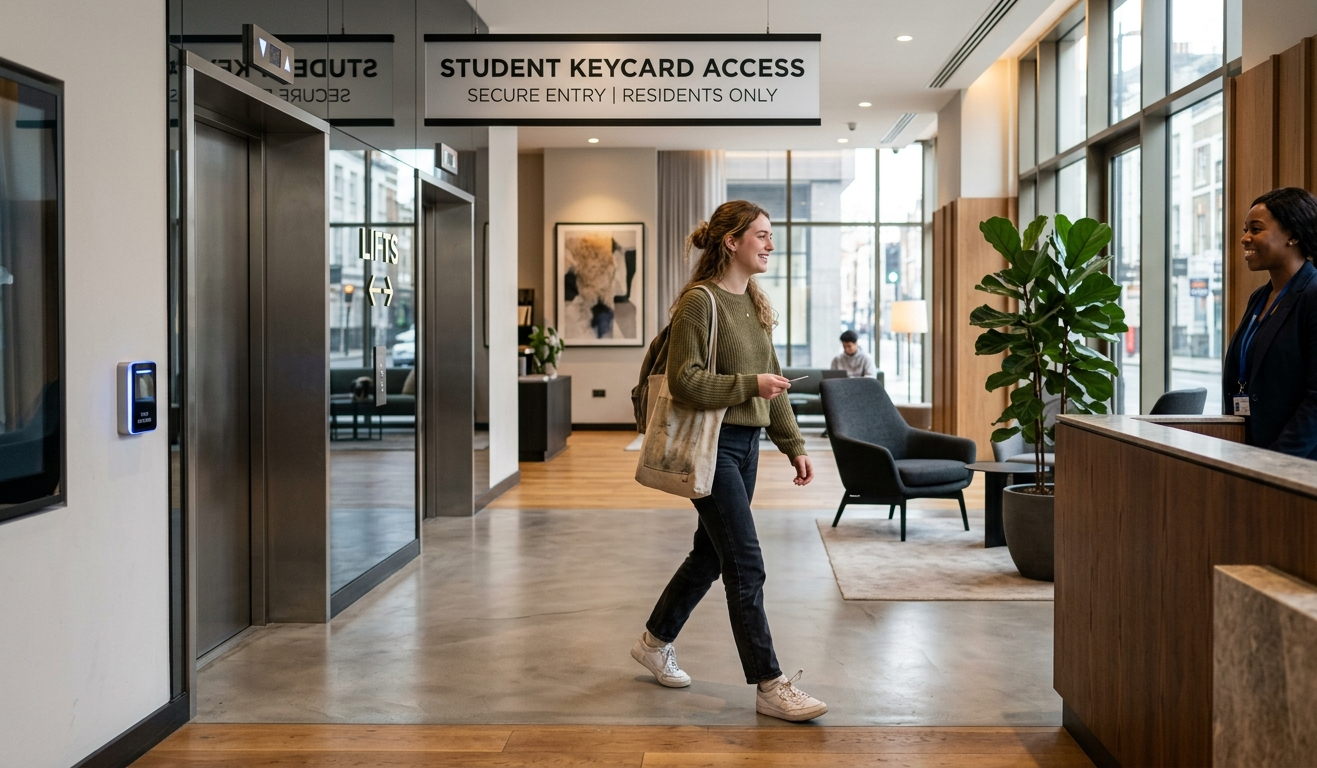
Both can be safe, but a lot of modern student flats have all sorts of security systems in place, like 24/7 concierges and electronic door keys that you can’t find in a dorm.
Can a first-year student live in an apartment?
Yes, lots of first years actually choose to live in apartments from the get-go. Universities normally recommend dorms for the first year, but a lot of students just want a bit of stability from day one.
Do apartments require a guarantor?
Yes, usually. Especially for international students. But a lot of the time, all you need to do is pay your rent upfront and get the job done.
The Final Word
Choosing the right place to live is one of the biggest decisions you're going to make, and it can make a real difference to your whole time at university. While dorms have their place, we think most students are going to end up in a private flat at some point.
At Student Luxe, we're here to help make your move a success. Our fancy collection of student apartments has been designed with one thing in mind: giving you the academic ROI of a top-grade home life. So, come on in, we can't wait to see what you do next!