
Living in Belgravia: A Student's Guide to London's Most Refined Address
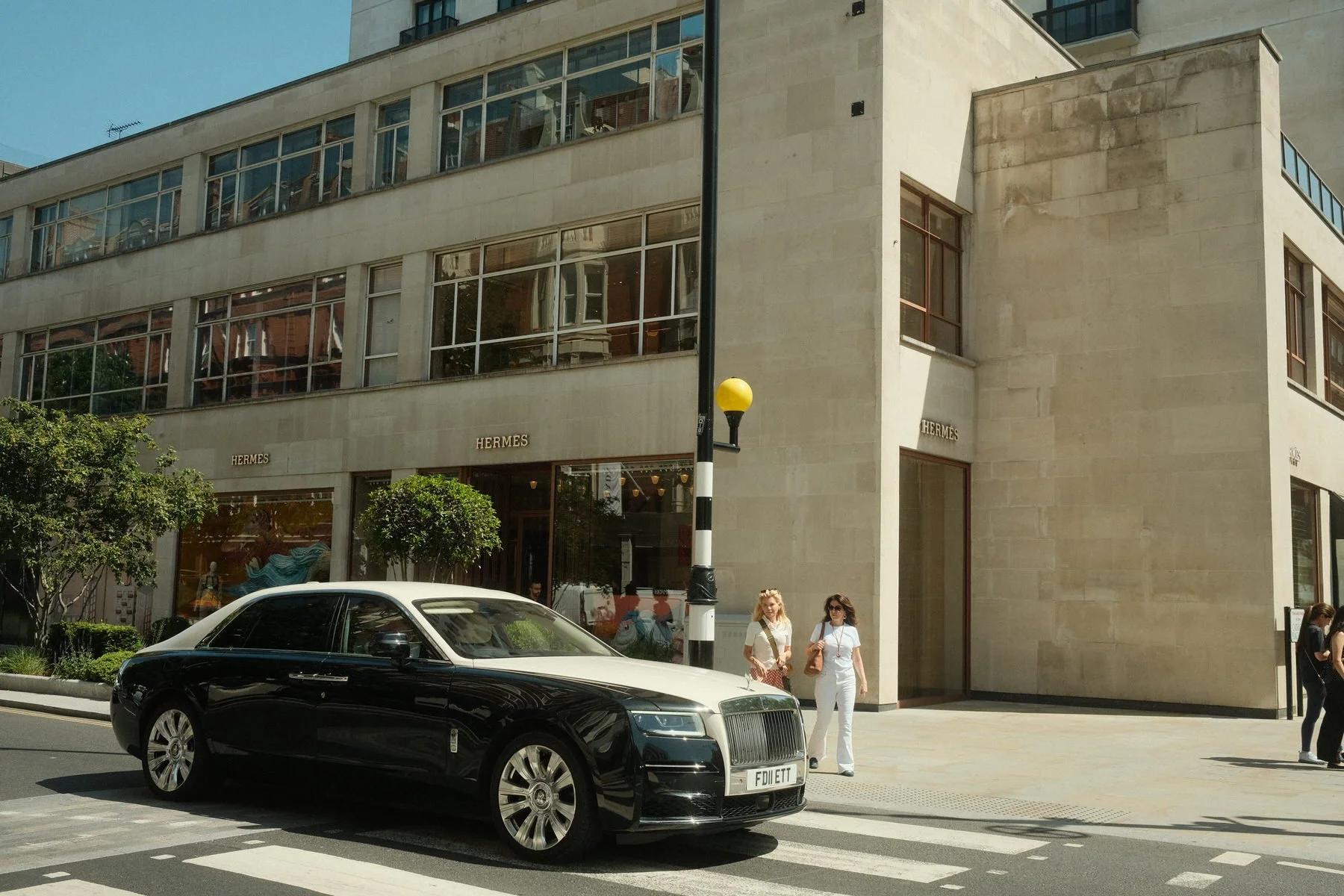
White stucco terraces, sixteen Michelin stars, and a postcode that's quietly been home to Mozart, Mary Shelley and Margaret Thatcher. Here's why Belgravia is one of the most considered choices a student in London can make.
Belgravia in one breath
If Mayfair is loud old money and Chelsea is performative chic, Belgravia is the address that doesn't feel the need to announce itself. Tucked between Knightsbridge, Westminster and Chelsea, it's the kind of neighbourhood where the gates are quiet, the railings are spotless, and the residents (many of them ambassadors, founders, and the occasional film director) would rather you didn't notice them at all.
For a student moving to London, that discretion is the point. You're not stepping into a postcode that's trying to impress you. You're stepping into one that takes the standards of living it offers entirely for granted.
A neighbourhood designed, not grown
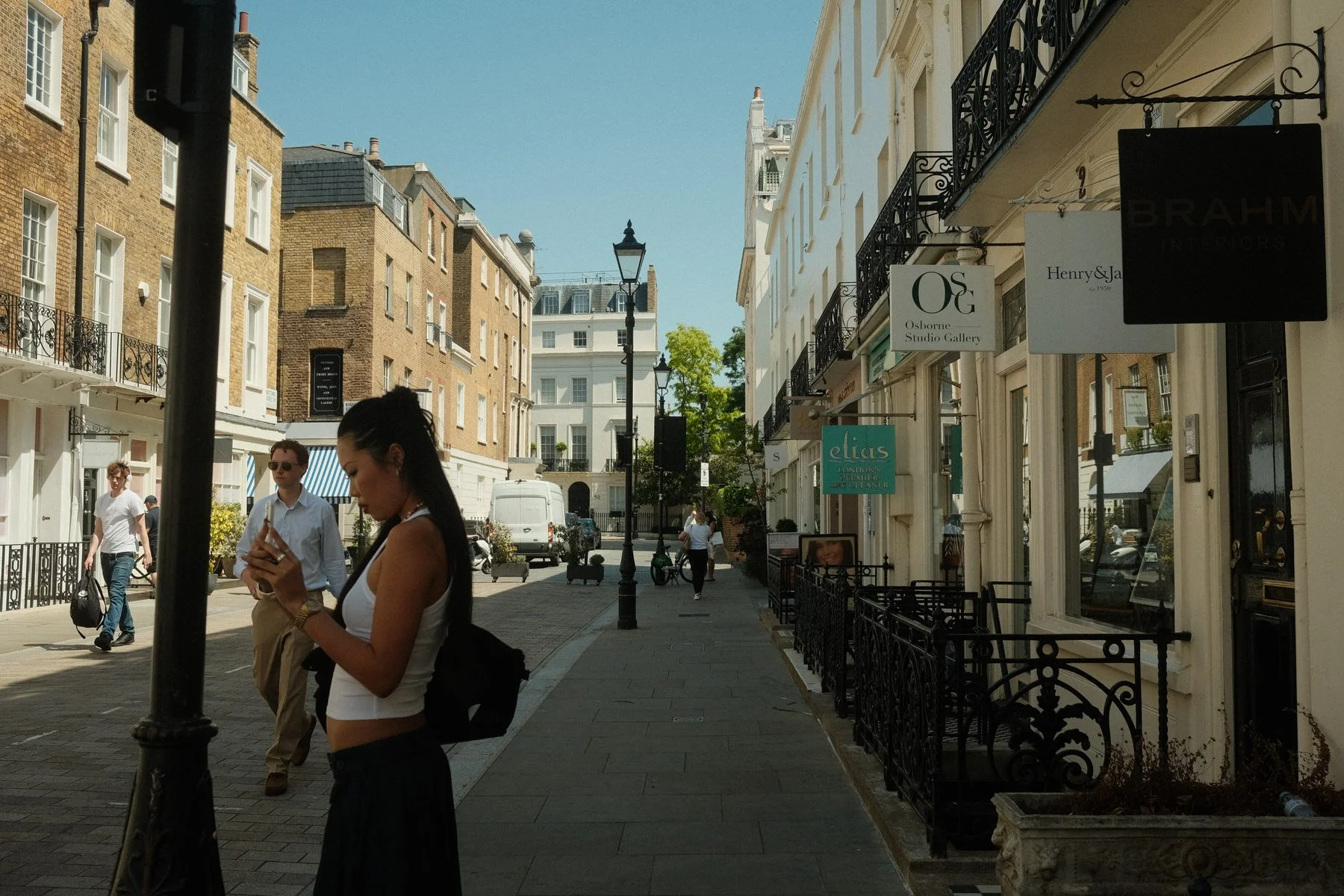
Most of London evolved street by street. Belgravia was drawn. In the 1820s and 30s, master builder Thomas Cubitt was commissioned by the Grosvenor family to turn what had been a damp stretch of marshland into a residential quarter for the aristocracy. What he produced, the cream-stuccoed terraces, the wide crescents, the rhythmic procession of garden squares, has barely been touched in nearly two centuries. New-build development is rare, and the visual language of white stucco, painted sash windows, slate and wrought iron remains the law of the streetscape.
The result is the most architecturally coherent neighbourhood in central London. Walk from Belgrave Square to Eaton Square to Chester Square and you're walking through a single, sustained piece of urban design. It's the closest thing the capital has to a Georgian film set, except people actually live in it.
Behind the townhouses: the mews
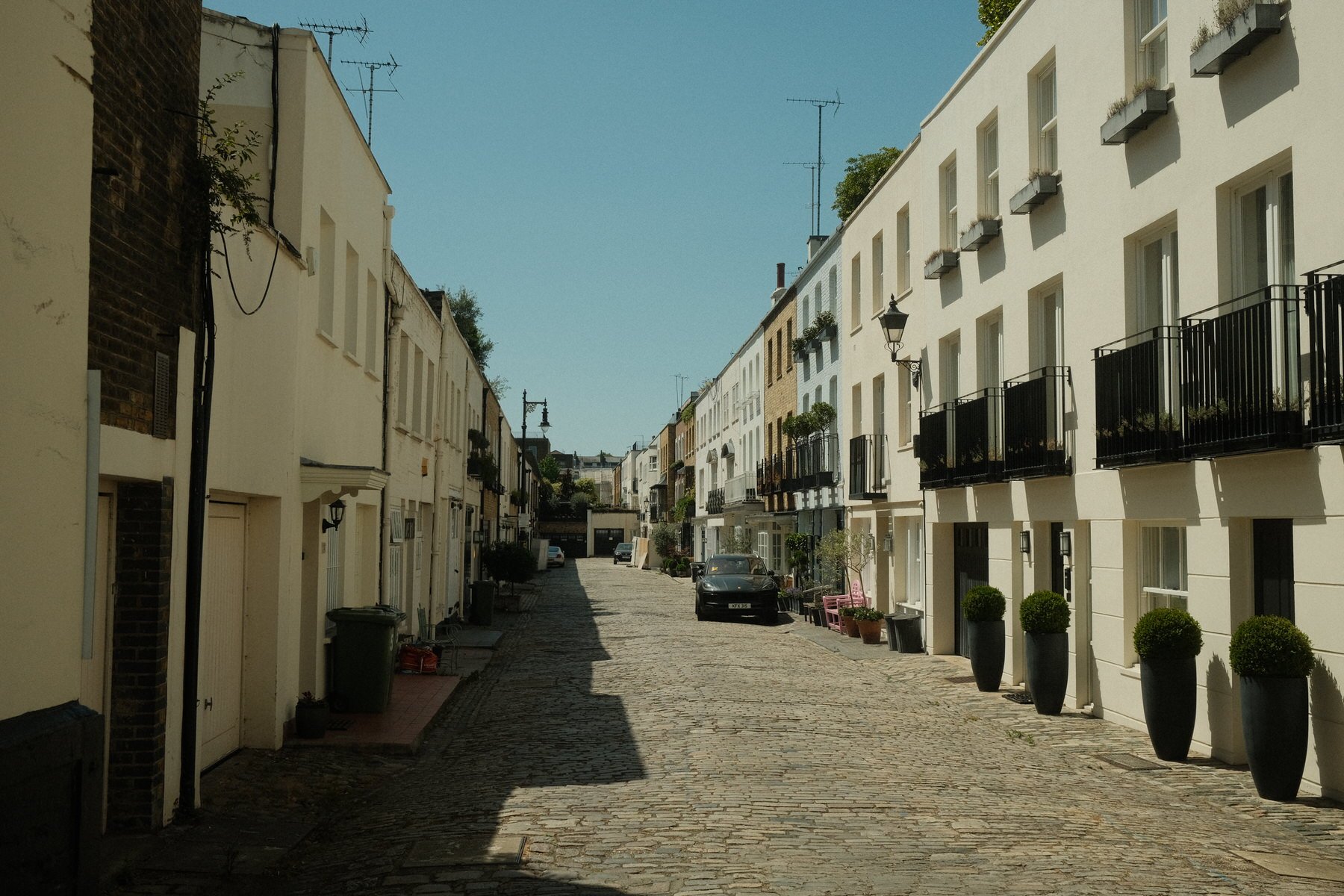
Hidden behind the grand frontages is Belgravia's other secret: the mews. Originally built as stables and servants' quarters for the big houses, these cobbled cul-de-sacs (Eaton Mews North, Halkin Mews, Groom Place, Eccleston Square Mews) have become some of the most coveted addresses in London. Together with neighbouring Knightsbridge, the area contains the densest concentration of original mews streets anywhere in the city, around forty in total. Many have been beautifully restored into compact period homes that combine privacy, cobbled charm and a community feel that grand houses can never quite replicate.
The famous neighbours
A short, very partial list of people who've called Belgravia home:
Mozart, who wrote his first symphony at 180 Ebury Street in 1764, aged eight. He was influenced by Johann Christian Bach (son of J.S.), then living in the area.
Mary Shelley, author of Frankenstein, at 24 Chester Square.
Margaret Thatcher, also Chester Square.
Ian Fleming, who invented James Bond, followed later by Sean Connery and Roger Moore, who both played him.
Vivien Leigh, Sir Laurence Olivier, Sir Michael Caine, Joan Collins, Sir Andrew Lloyd Webber, Elizabeth Hurley.
More recently: Roman Abramovich, Nigella Lawson, George Soros, Lord Norman Foster.
You won't meet them in the corner shop. But you may, on a quiet Tuesday, pass one of them walking a dog along Elizabeth Street, and that fact alone tells you something about where you've moved to.
Where to eat, when your parents visit
Belgravia and the streets immediately around it contain sixteen Michelin-starred restaurants, a remarkable density for a neighbourhood this size.
Pétrus by Gordon Ramsay for modern French at its most polished.
MUSE by Tom Aikens on Groom Place: a converted Georgian mews, 23 covers, one of the most intimate Michelin experiences in London.
Amaya in Knightsbridge for elevated Indian small plates.
La Poule au Pot on Ebury Street: a French restaurant that has stubbornly refused to modernise since the 1960s and is all the better for it. Long the local choice for a candle-lit dinner.
The Thomas Cubitt if your parents want a proper gastropub Sunday roast in surroundings that won't embarrass them.
The Alfred Tennyson for an evening that starts with a drink and accidentally becomes dinner.
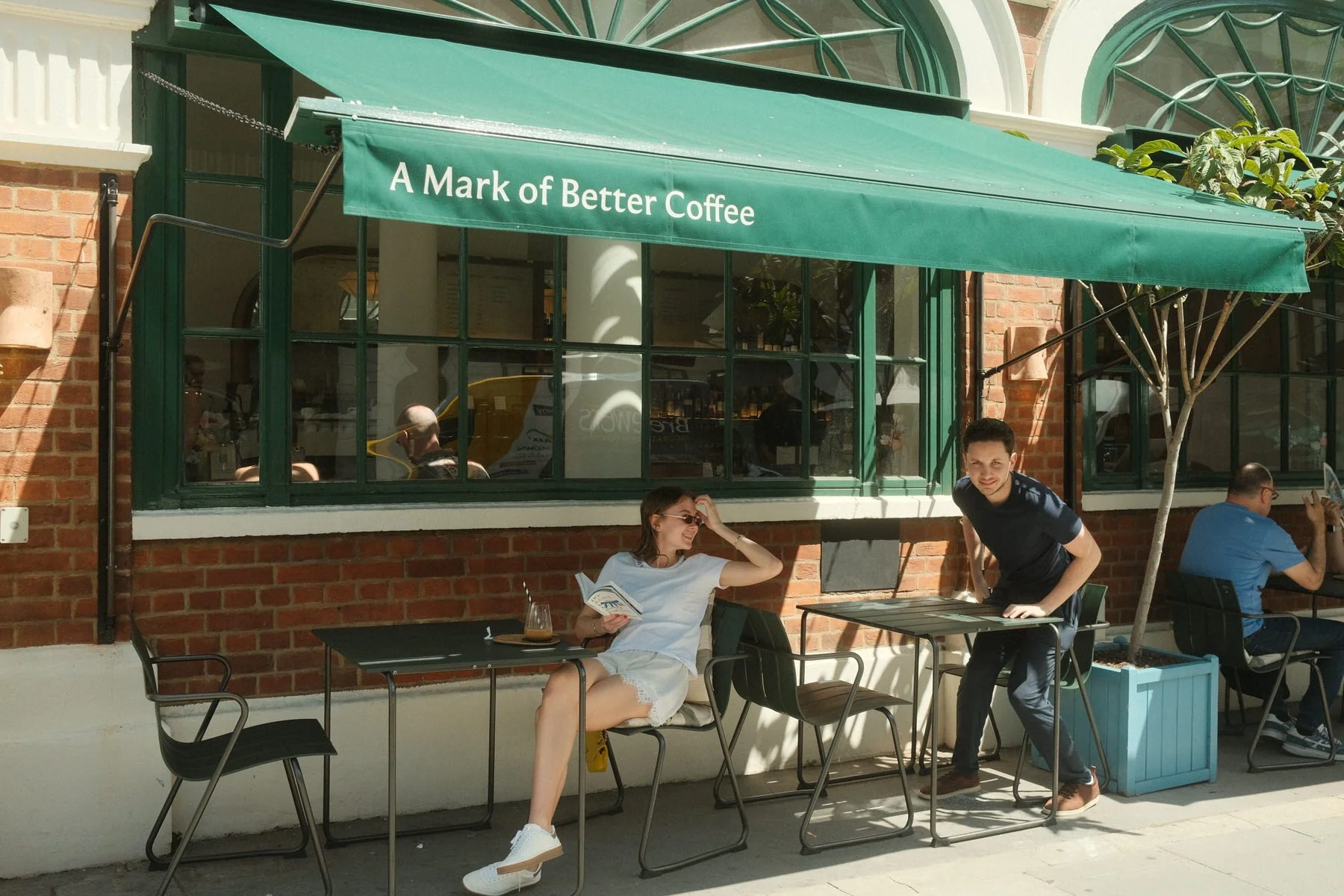
For brunch on a study break: Wild by Tart at Eccleston Yards, The Buttery on Ebury Street, or, for the inevitable Instagram shot, Peggy Porschen's pink-pastel cake parlour at the corner of Elizabeth Street.
The streets you'll actually live on
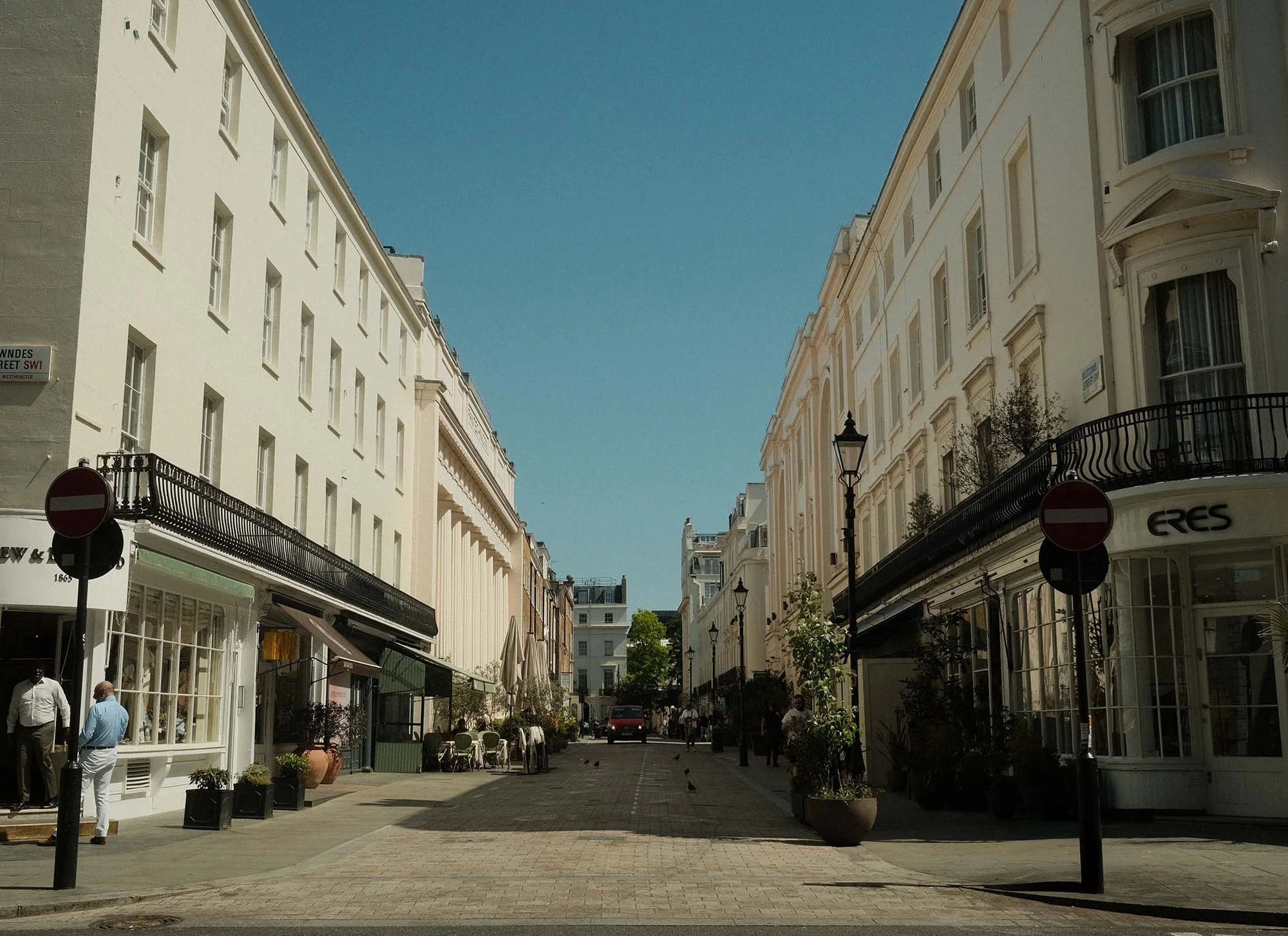
Belgravia's character changes from one street to the next:
Elizabeth Street. Victorian townhouses, pink corner buildings, independent boutiques and the city's most photogenic florist displays. The street most people Instagram before they ever live here.
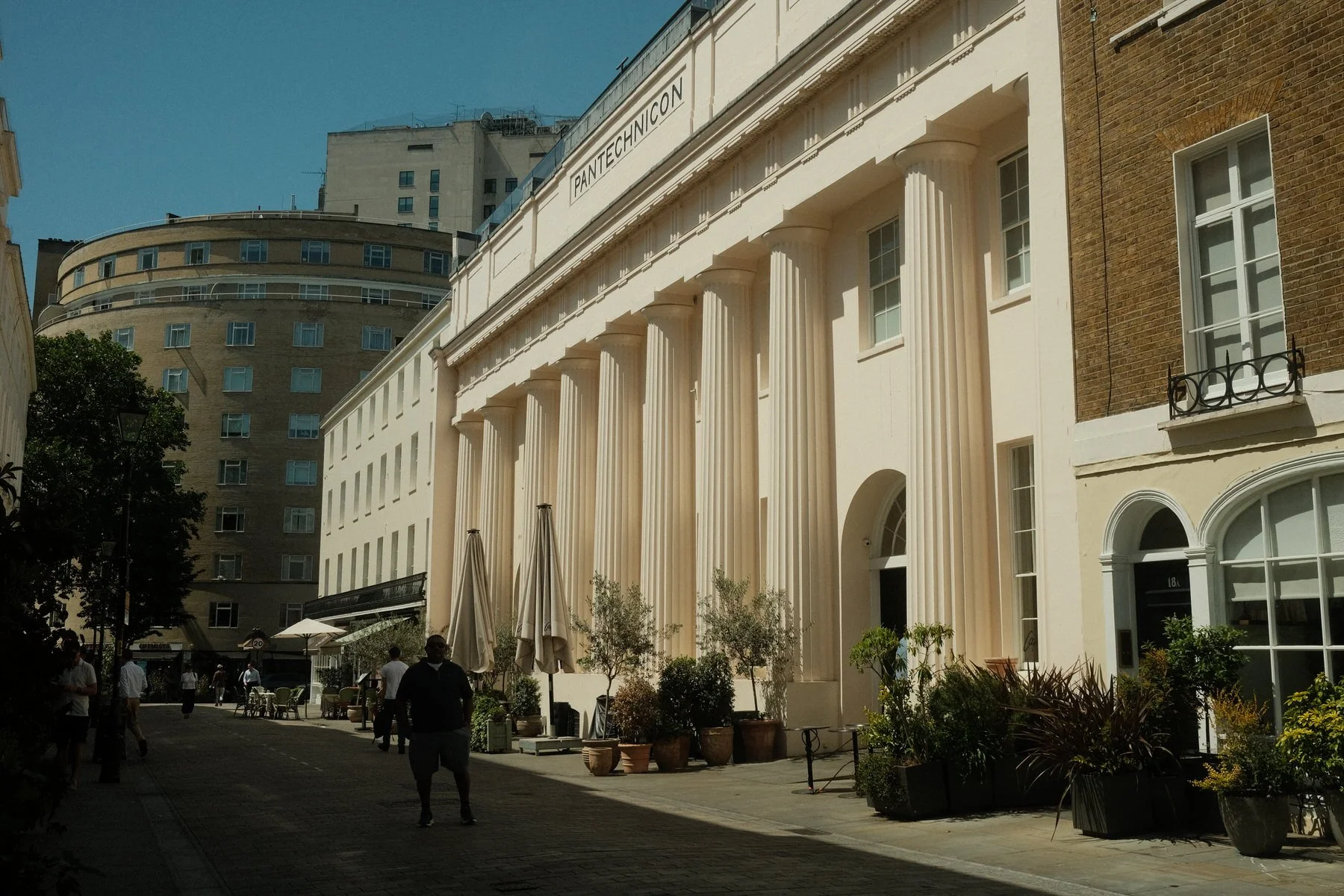
Motcomb Street. Pedestrianised, a little more design-led, anchored by Pantechnicon (a five-floor Japanese-Nordic emporium with cafés and a roof garden), plus restaurants and galleries. This is where we’d hang out 24/7 if we didn’t have day jobs…
Pimlico Road. The design and antiques quarter. LINLEY, fine art dealers, the weekend farmers' market at Orange Square.
Pavilion Road. Just on the Knightsbridge edge, London's longest pedestrianised mews, lined with cheesemongers, butchers, bakers and the kind of boutiques (Olivia von Halle, The White Company) that make a Saturday afternoon disappear.
Eccleston Yards. A converted courtyard near Victoria, full of independents, wellness studios and somewhere new for coffee every few months.
Green space, on your doorstep
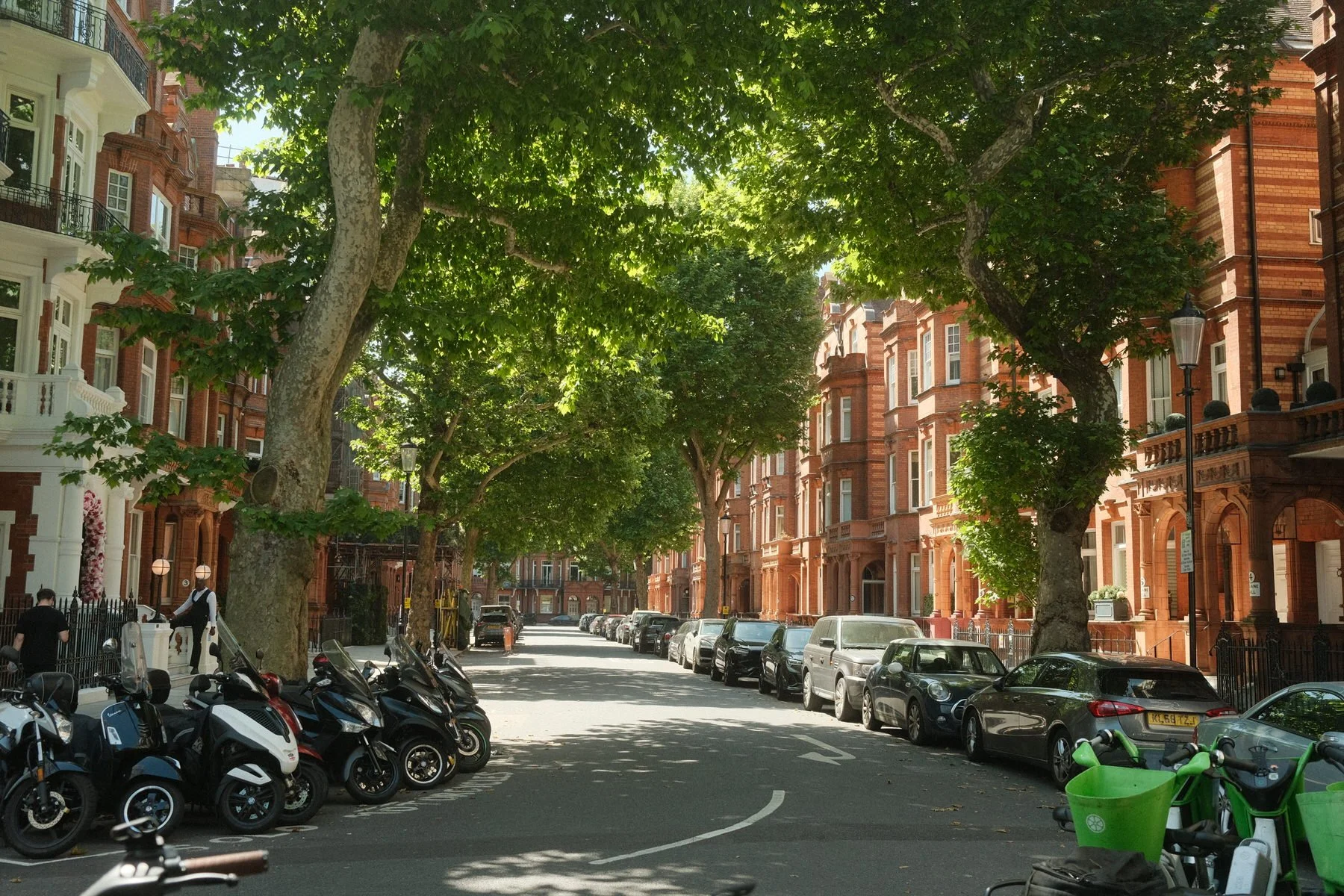
Belgravia's residents have private keys to some of London's most beautiful garden squares (Belgrave Square, Eaton Square and Chester Square), though access depends on the building you live in. Beyond that, Hyde Park is a ten-minute walk to the north, Green Park and St James's lie to the east, and the Thames is a short stroll south. For a central London neighbourhood, the ratio of grass to pavement is unusually generous.
Getting to your lectures
This is where Belgravia quietly excels for students. You're surrounded by Tube stations rather than sitting on top of one, which keeps the streets quiet, but everything is in walking distance:
Knightsbridge (Piccadilly line): straight shot to South Kensington for Imperial College, the RCA, and Chelsea's UAL campuses.
Sloane Square (Circle, District): for King's, LSE and UCL via interchange.
Victoria (Victoria, Circle, District and National Rail): the workhorse, plus direct trains to Gatwick.
Hyde Park Corner (Piccadilly): for Mayfair, Green Park, the West End.
Heathrow is around 45 minutes via the Piccadilly line direct from Knightsbridge. Eurostar from St Pancras is twenty minutes by Tube. For Cambridge or Oxford, you're a short hop from King's Cross, Paddington or Liverpool Street.
The schools picture is equally strong. Westminster School, King's College London Maths School, Francis Holland (Sloane Square), Queen's Gate and the Lycée Français Charles de Gaulle are all in or adjacent to the area, which is why so many international families anchor here.
Is it the right choice for you?
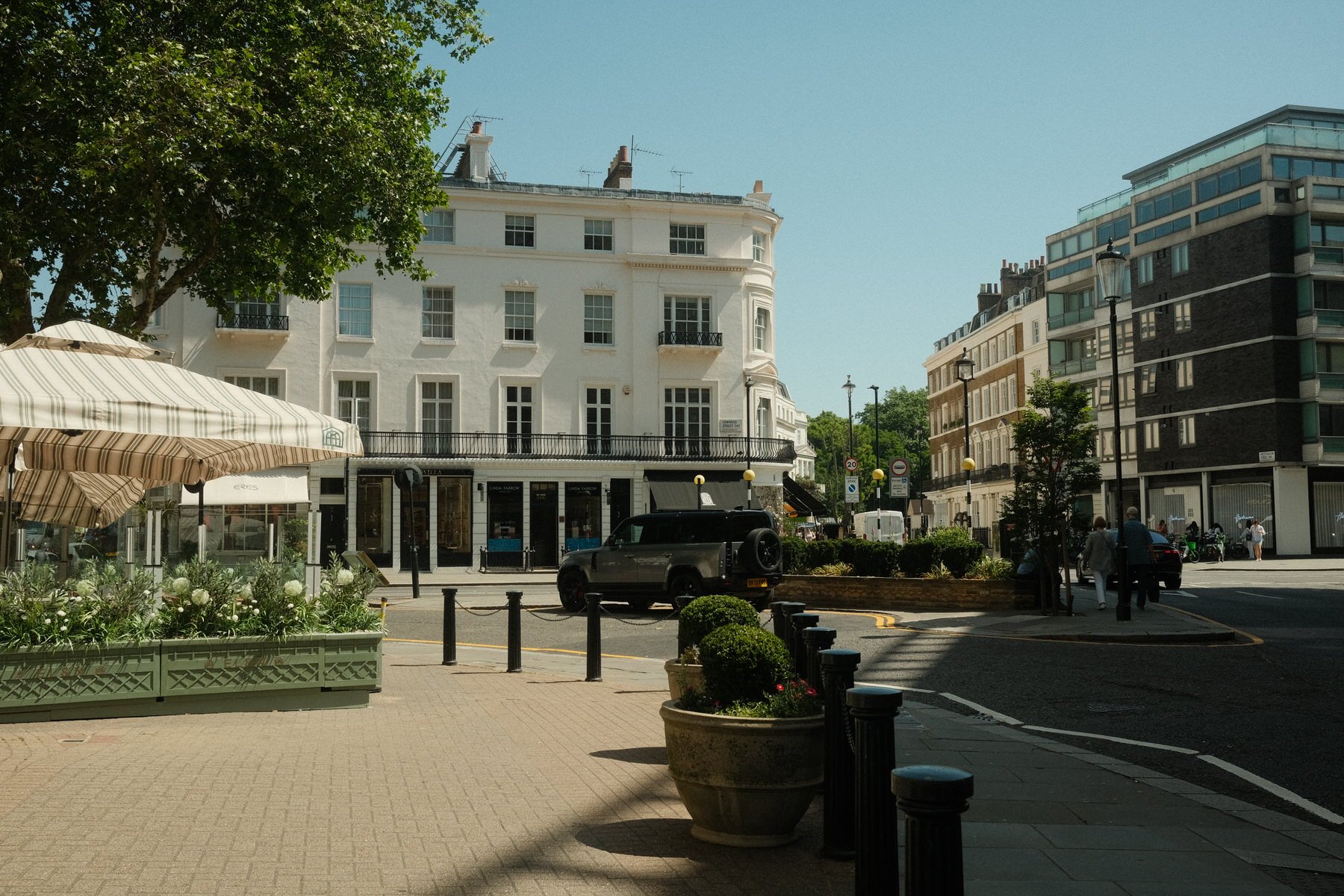
Belgravia isn't for the student who wants a buzzing Friday-night strip outside their front door. Soho, Shoreditch and Camden are a Tube ride away, and that's by design. You come home to Belgravia to sleep, to study, to host parents and visiting friends without apology. It's a neighbourhood that rewards a certain kind of taste: one that prefers a long lunch on Pimlico Road to a queue outside a club, and a quiet square to a crowded high street.
For students and families who value privacy, security, architectural beauty and proximity to the best of London, without the noise that usually comes with all four, there are very few addresses in the world that compete.
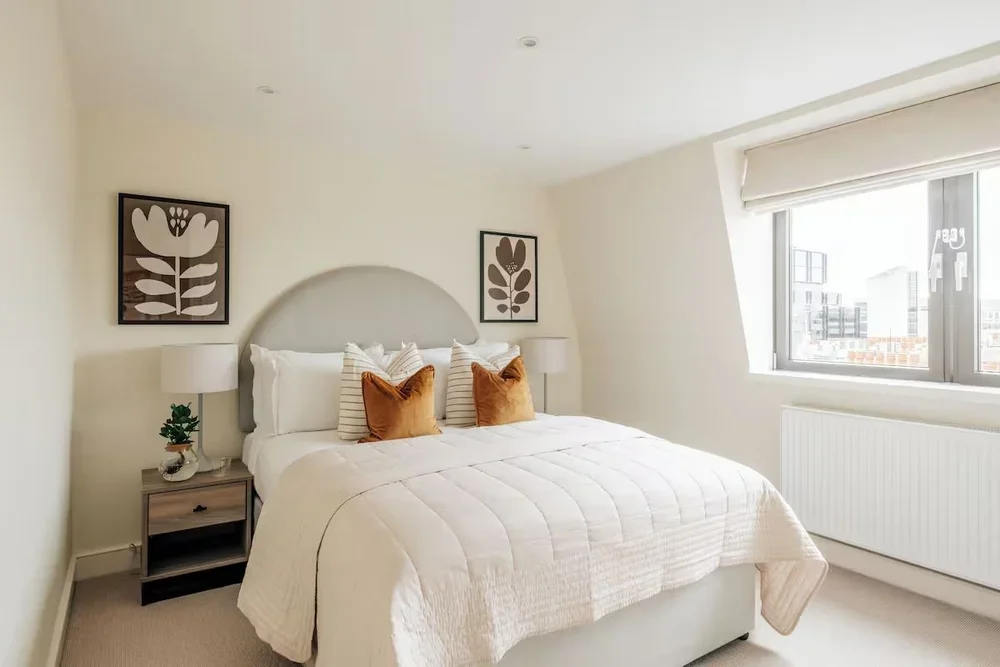
Living in Belgravia with Student Luxe
Student Luxe offers fully serviced, beautifully furnished apartments in London's most considered neighbourhoods, designed for international students and families who expect the standards of an apart-hotel from their term-time home. If you'd like to enquire about availability, we'd love to help you find the right address.
Available by enquiry only.